Canada, a presentation

CANADA

Two languages. Many people. One country.

A visual talk in 15 slides.
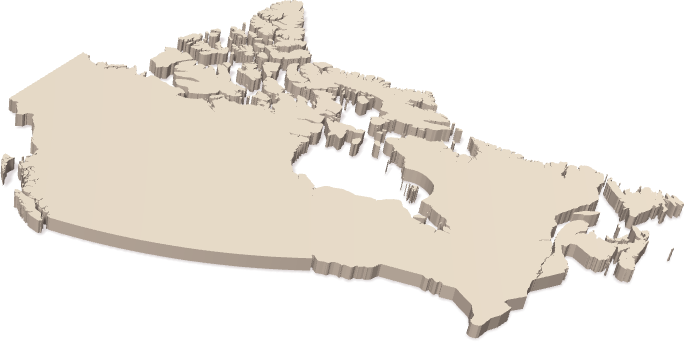
Two solitudes

One country, two societies. The phrase comes from Hugh MacLennan, 1945.

  • English Canada and French Canada
  • One border, two conversations
  • Different schools, media and politics
  • Still visible in the news today

Can one country be two things at once?

41.8million

people in Canada, 2026 estimate

Canada is the second-largest country on earth.

  • Four in five live in cities
  • The north is almost empty
36,991,981People in the 2021 census, the last full count
+13.0%Growth in five years, 4.8 million people
+0.5%Growth in 2020-2021, slowest since 1915/16
4.2People per square kilometre

A country on one street

Four provinces hold 86% of the population.

Ontario38.5%
Québec23.0%
British Columbia13.5%
Alberta11.5%
Everywhere else13.5%
66%

live within 100 km of the US border.

  • About 4% of the territory
  • 73.7% live in the 41 largest cities

English

75.5% of Canadians
  • Most common first language
  • Official across Canada

French

21.4% of Canadians
  • Mostly in Québec
  • Official across Canada
18% speak both

Built by compromise

Six dates that shaped language rights in Canada.

1867

ConfederationFour provinces, two languages.

1969

Official Languages ActEnglish and French made equal.

1971

MulticulturalismNo official culture.

1982

Charter of RightsLanguage rights entrenched.

1988

Multiculturalism ActThe first law of its kind.

1995

ReferendumNo side wins by 54,288 votes.

Québec

The only province where French is the majority language.

  • French is the official language
  • Stricter language laws than other provinces
  • Language use is measured every year
71.2% speak French most often at home, 2025
41.9% on the Island of Montreal. 19.1% speak English, 16.1% another language.
Bill 96, 2022
  • French is the common language
  • Firms with 25 or more employees must offer French training
992,305

French speakers outside Québec.

  • 6.1% of the population in 1971
  • 3.5% in 2021
  • 477,102 students in French immersion
  • Up 39.6% since 2010
Ontario 533,560 3.8%
New Brunswick 231,850 30.3%
Alberta 72,203 1.7%
British Columbia 65,568 1.3%
1.8million

5.0% of the population. First Nations, Métis and Inuit.

  • Youngest population in Canada, average age 33.6
  • 70+ Indigenous languages, three in four endangered
  • 600+ First Nations across the country
94Calls to Action, 2015
69%of Inuit live in Inuit Nunangat, their homeland
2021UN Indigenous rights law

Canada is built on Indigenous lands.

23.0%

of Canadians were immigrants or permanent residents in 2021.

8.3 millionimmigrants in 2021
1.3 millionarrived 2016-2021, a record
62%came from Asia
26.5%belong to a visible minority, 13.4% in 2001

Top origins of recent immigrants: India 18.6%, Philippines 11.4%, China 8.9%.

Three answers to one question

What holds Canada together?

01

Two founding groups

1963-69
  • English and French partnership
  • Shared power, not one culture
  • Two groups, two languages
02

Multiculturalism

1971 and 1988
  • No official culture
  • Diversity became the answer
  • First law of its kind, 1988
03

Rights charter

1982
  • Rights, not family background
  • Charter of Rights and Freedoms
  • 78% call it essential

What Canadians value

Survey, 2022. How important is each item to Canadian identity?

  • Charter and health care top the list.
  • Bilingualism comes last.
Charter78
Health care78
Indigenous peoples69
Flag65
Multiculturalism64
Bilingualism42

Environics Institute, 2022. Share who say "very important".

What it means

  • Two languages, not one story
  • Rights matter more than family background
  • Québec is central, but not the whole country
  • Canadian identity is still changing
My take

Canada is a work in progress, and that is a good thing.

Your turn

  1. Can one country have two majorities?
  2. Is bilingualism a right, a cost, or both?
  3. Which answer fits Canada best: people, cultures, or rights?

Turn to the person next to you. One minute.

Two languages. Many people. One country.

A country built on debate, law, and compromise.

Sources: Statistics Canada, Canadian Heritage, Élections Québec, Environics Institute.
←→ navigate

Canada